
How do you want your planet served?
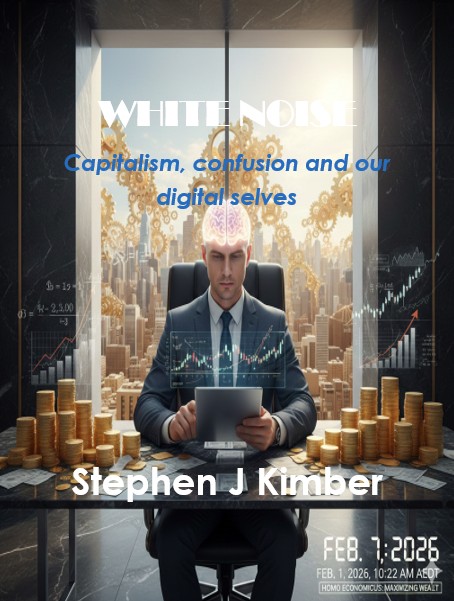
You may recall the following from an earlier chapter:
‘There is no nation on earth where it’s version of The Dream speaks to – not even implies – that there are, or will ever be, systemic impediments to the legitimate accruing of wealth. The Dream alleges that anyone can make it big.
And yet, worldwide, environments are trashed, inequality is on the rise, rich people act with impunity, and wars are fought (or promised) over resources. Indeed, there’s an entire litany of other examples of a soured and fraudulent set of promises from [your Nation’s] DREAM, too many to go into – you can simply add your own.
The reality is that unless things change, the acquisition (or retention) of resources, land, and rights, including intellectual property rights, will continue to serve to make a very small number of wealthy people wealthier. And while it’s true that a little of that wealth will trickle down, in time – and we know how slow this trickle actually is – something in us lets it all go on. Mythologically.
The reality is that, in the 3rd decade of the 21st Century, the vast majority of people feel decidedly unDREAMY. (We may not understand all the systemic and cultural checks on the gaining of wealth – nor of course abandon the mythic dream that this will somehow make us content – but we’re certainly feeling that it’s not really working for us.)
These are the outcomes – a catalogue of sins – of a planet in crisis with its choice[1] of leading economic system and ideology.
The catalogue of sins:
Many sins of capitalism – and its Frankenstein creation/inheritor, Technofeudalism – are apparent, but let’s stick with the big three for now. Capitalism (and, ironically, some of its positive aspects such as improved living standards, health and science and technology upgrades, etc.) has produced, and is still producing:
~ Industrial pollution and environmental degradation: One of the leading ideas of Industrial Capitalism is economies of scale. Economies of scale suggest that as production increases so the unit cost declines. Ceteris paribus[2] – which of course they never really are – in the Capitalist world, BIG is better (see almost any economics textbook).
Consider the ramifications of the almost universal adoption of this principle. For the capitalist, big is beautifully profitable. In agriculture, economies of scale have helped grow the huge agribusinesses of the 20th century and all the attendant issues with diet (think of sugar for instance, grown here in Australia on large cane farms), or habitat destruction (think palm oil production in S.E. Asia). In business, economies of scale have witnessed the multinationals that flaunt the rules of many a nation (paying less tax than any individual and often unleashing environmental mayhem [think Bhopal and Union Carbide and any number of other environmental fouls]), in politics we see the corporate lobbyists of big oil and energy companies pushing to utilise tar sands in environmentally sensitive areas…
And so it goes, as Mr. Vonnegut would have it.
~ A ‘Haves and Have Nots’ world: If Modern Capitalism did not create, it at least exacerbated the ‘civilised’[3] human tendency, a ‘Haves’ and ‘Have Nots’ world? This creation of course carries with it a whole raft of ills: wholesale poverty on national scales, civil wars, famine, environmental degradation, and dreadful pop concerts aimed at ending world poverty.
~ The shifting of its habit of exploitation (wealth being amassed by the few) in space and time. Thus we note the misery of Western Europe’s and later the USA’s industrial masses in the nineteenth and early twentieth centuries and then, with imperialism, the movement out into the New World, to Asia (note the demolition of India’s artisan class by trade with industrialising Britain in the late 18th and early 19th centuries) , to Africa, & to the Pacific Islands. Where are the world’s poorest and sickest now? In Africa, which was rushed for over the last part of the 19th and first part of the 20th centuries. In the 21st Century, one key shift for exploitation for poor old Homo economicus has been into online spaces – a virtually limitless market.
Three sins is enough to go on with.
Let’s look at each and every one of them.
[1] Of course it’s not the planet that made – or makes – the choices with economy and ideology. It is Homo sapiens. Actually, it’s Homo economicus.
[2] Economists the world over will recognise this Latin phrase; it means all things – or ‘other’ things – being equal. The idea that we can somehow summon the sobriety of a dead Language and sanctify greed and trickle down economics and wage disparities and so on and so forth is of course ridiculous, If examined in the cold hard light of our modern incredibly and increasingly inequitable world.
[3] See Rutger Bregman’s ‘Humankind’ (2019) re the idea that civilisation actually undid the humanity in Human Kind. There is more on this subject in the Human Nature chapter.
 Inkstained fingers